
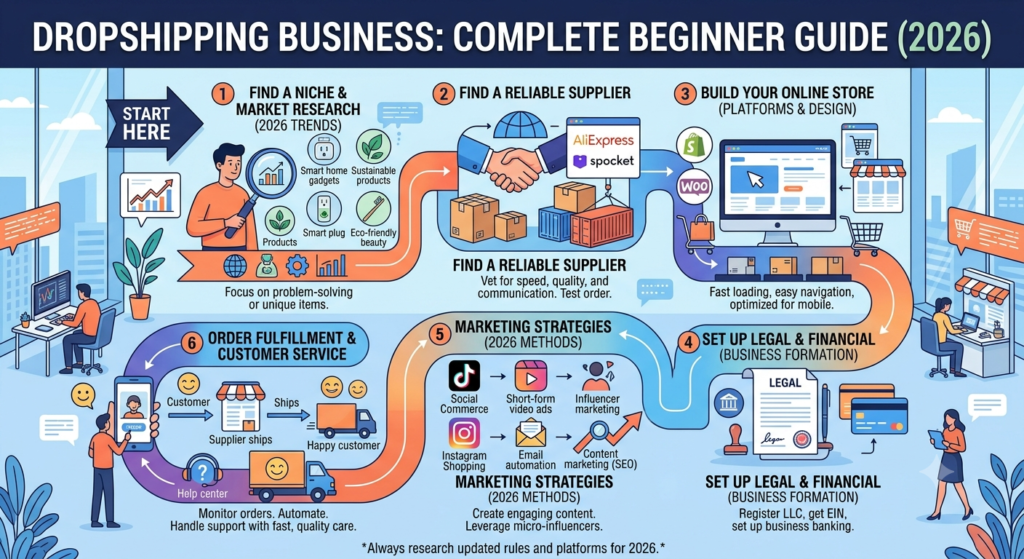
Starting an online business has never been easier, and dropshipping is one of the most popular ways to enter the world of e-commerce. Unlike a traditional retail business, you don’t need to buy inventory or rent a warehouse. Instead, you sell products online while a supplier stores, packs, and ships the orders directly to your customers.
If you’re looking for a low-investment business idea, this guide will walk you through everything you need to know about starting a dropshipping business in 2026.
What Is Dropshipping?
Dropshipping is an online business model where you sell products without keeping them in stock.
Here’s how it works:
- A customer places an order on your online store.
- You forward the order to your supplier.
- The supplier packs and ships the product directly to the customer.
- You earn the profit from the difference between your selling price and the supplier’s price.
For example, if a supplier sells a product for $15 and you list it on your store for $30, your gross profit is $15 before advertising and other business expenses.
Why Is Dropshipping So Popular?
Many people choose dropshipping because it has a relatively low barrier to entry.
Some of the biggest advantages include:
- Low startup costs
- No inventory management
- No warehouse required
- Work from anywhere with an internet connection
- Access to thousands of products
- Easy to scale as your business grows
These benefits make dropshipping attractive for students, freelancers, and aspiring entrepreneurs.
Is Dropshipping Still Worth It in 2026?
Yes—but success is no longer as simple as uploading random products and running ads.
Today’s successful dropshipping stores focus on:
- Selling useful, high-quality products
- Building a trustworthy brand
- Providing fast customer support
- Creating engaging product content
- Running targeted advertising campaigns
Customers have more choices than ever, so building trust is essential.
Step 1: Choose the Right Niche
A niche is the specific category of products you want to sell.
Some popular niches include:
- Home and kitchen
- Fitness equipment
- Pet products
- Mobile accessories
- Beauty and skincare
- Fashion accessories
- Baby products
- Car accessories
- Smart gadgets
- Home organization products
Choose a niche that has consistent demand rather than relying only on short-lived trends.
Step 2: Find Reliable Suppliers
Your supplier plays a major role in your business.
A good supplier should offer:
- Quality products
- Fast shipping
- Competitive prices
- Reliable communication
- Clear return policies
Always order sample products before selling them. This helps you verify quality and shipping times.
Step 3: Create Your Online Store
Your website is your digital storefront.
Many beginners choose platforms like Shopify because they simplify store setup and payment integration.
A professional store should include:
- Clean homepage
- Product categories
- High-quality product images
- Detailed descriptions
- About Us page
- Contact page
- Privacy Policy
- Refund Policy
- Shipping Policy
A well-designed website builds customer confidence.
Step 4: Add Winning Products
Instead of uploading hundreds of products, start with a smaller collection of carefully selected items.
Look for products that:
- Solve a problem
- Have strong visual appeal
- Receive positive customer reviews
- Are lightweight and affordable to ship
- Have healthy profit margins
Quality matters more than quantity.
Step 5: Write Better Product Descriptions
Don’t copy descriptions from suppliers.
Instead, explain:
- The problem the product solves
- Key features
- Main benefits
- Product specifications
- Care instructions (if applicable)
Focus on how the product improves the customer’s life rather than simply listing features.
Step 6: Set Competitive Prices
Pricing should cover:
- Product cost
- Shipping charges
- Advertising costs
- Transaction fees
- Desired profit margin
Avoid setting prices too low just to compete. Customers often associate fair pricing with better quality and service.
Step 7: Market Your Store
Even the best products won’t sell if people don’t know about them.
Popular marketing channels include:
Facebook & Instagram Ads
Great for reaching targeted audiences through images and videos.
TikTok
Short, engaging videos can help products gain organic attention.
Google Shopping
Allows shoppers to discover products while searching online.
Search Engine Optimization (SEO)
Writing helpful blog articles can bring free traffic from search engines over time.
Email Marketing
Build relationships with customers by sharing offers, product updates, and useful content.
Step 8: Provide Excellent Customer Service
Customer service can make or break an online business.
Respond quickly to:
- Questions
- Order updates
- Return requests
- Shipping concerns
Happy customers are more likely to leave positive reviews and recommend your store.
Common Mistakes Beginners Make
Many new dropshippers struggle because they:
- Sell too many unrelated products
- Ignore customer service
- Copy competitor websites
- Use poor-quality product images
- Stop advertising too early
- Expect instant profits
Building a successful business takes patience, testing, and continuous improvement.
How Much Money Do You Need to Start?
Your startup budget depends on the platform and marketing strategy you choose.
Typical expenses may include:
- Domain name
- E-commerce platform subscription
- Marketing budget
- Logo and branding
- Product testing
- Business tools
Starting with a realistic budget allows you to test products and improve your store without unnecessary financial pressure.
Tips for Long-Term Success
Successful dropshipping businesses focus on creating value.
Some practical tips include:
- Build a recognizable brand
- Offer honest product information
- Invest in professional product photos and videos
- Learn digital marketing
- Analyze customer feedback
- Test new products regularly
- Keep improving your website
Consistency often matters more than finding a single “winning product.”
Final Thoughts
Dropshipping remains one of the easiest ways to start an online business in 2026, but it requires dedication, learning, and continuous improvement.
Rather than chasing quick profits, focus on building a trustworthy brand, offering quality products, and providing excellent customer service. Over time, these habits can help you grow a sustainable online business.